Yexmurin

Two candy match-three games, and the rules that actually separate them

Candy Crush Saga and Candy Crush Soda Saga come from the same studio, share an art style and are both free to install. The difference is in the board physics, and it changes how a hard level is solved.

What you get from this page

The two games

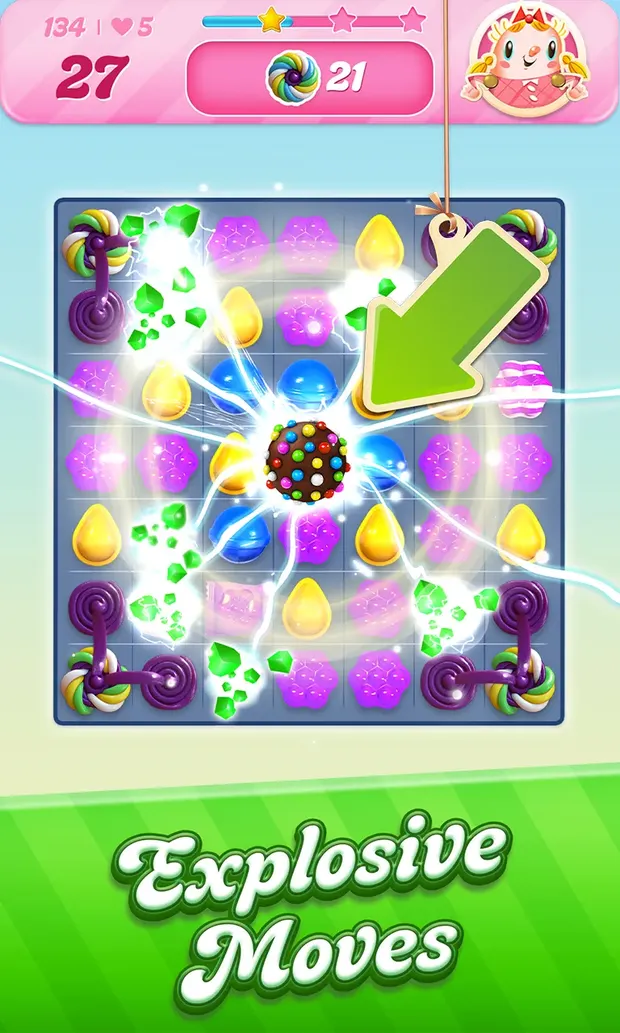
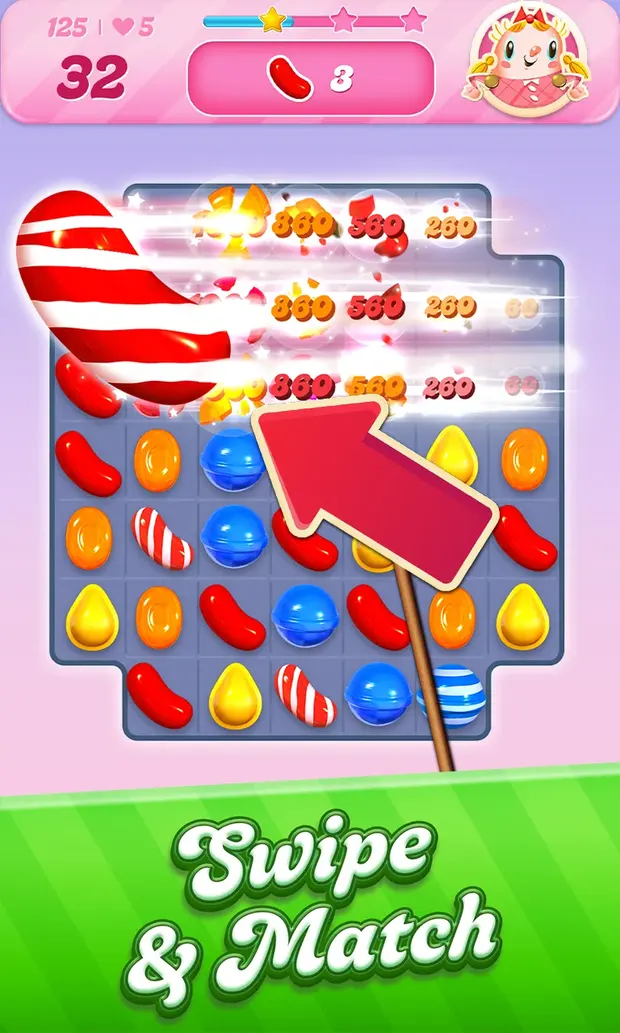
Candy Crush Saga board with coloured candies and a swap in progress
The original

Candy Crush Saga

King

Swap two adjacent candies to line up three or more. Five in a row makes a colour bomb, an L or T shape makes a wrapped candy, four in a line makes a striped one. Everything falls straight down, which means a board can be read from the bottom up and cleared predictably.

The level types matter more than the candy: jelly levels want you to clear the coating, ingredient levels want you to drop cherries to the floor, and the two demand opposite play. Ingredient levels are where most people stall, because clearing efficiently is exactly the wrong instinct.

Free to install · contains ads · in-app purchases · rated for everyone
Open on Google Play

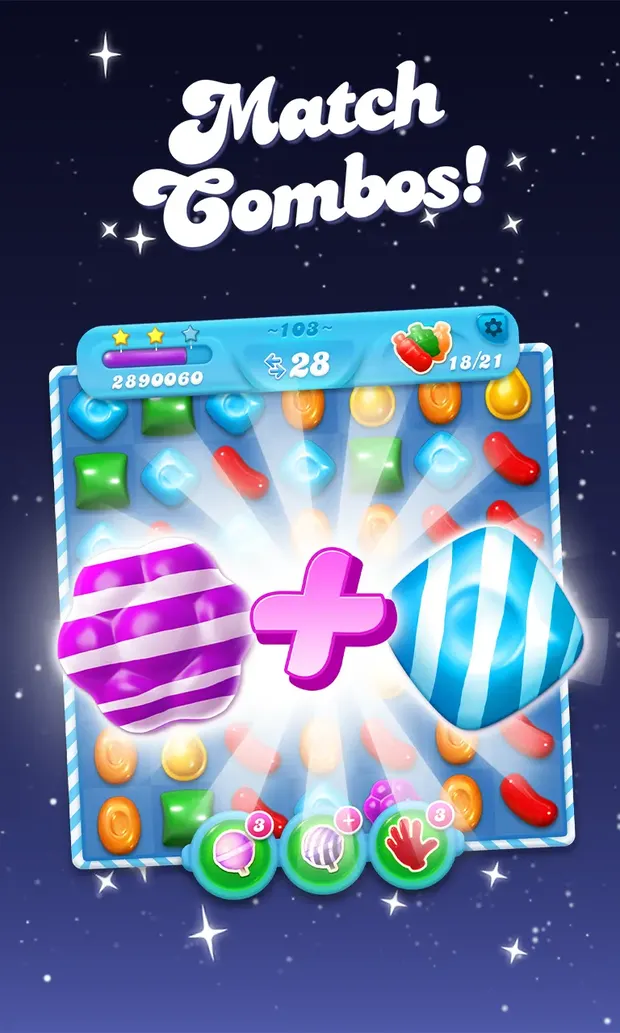
Candy Crush Soda Saga board with soda rising up the screen
The sequel

Candy Crush Soda Saga

King

The same swap, with one addition that rewrites everything: soda. Break a bottle and liquid rises, and candies inside the liquid float upward instead of falling. A board with soda has to be read in two directions at once.

That single change makes the sequel genuinely harder to plan rather than merely harder to clear. Bear levels and honey levels build on it, but the soda is the idea.

Free to install · contains ads · in-app purchases · rated for everyone
Open on Google Play

About the lives

Both games give five lives and take one for a failed level. A life returns roughly every half hour, so a bad run of five attempts costs the rest of the evening unless you spend something. This is the mechanic that decides whether either game suits you, and it is identical in both.

Candy Crush Saga level with special candies triggering a cascade

Where the cascades come from

Candy Crush Saga

Combining two special candies is the only move in either game with a large effect, and both games hide it. A striped candy swapped with a wrapped one clears three rows and three columns at once, which resolves boards that look unwinnable.

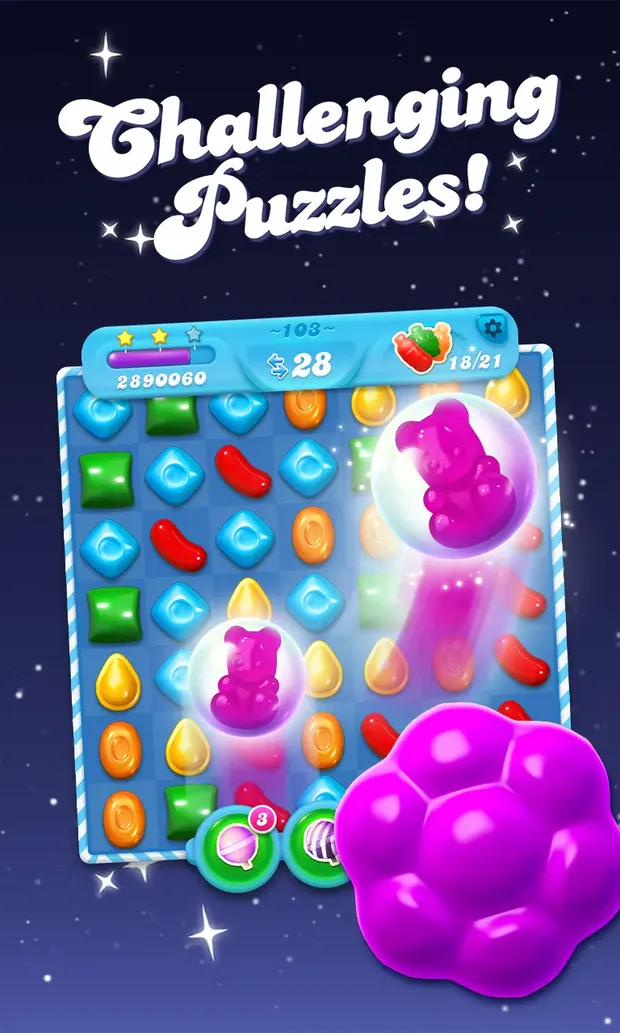
Candy Crush Soda Saga level with bears trapped in ice

Why Soda plays slower

Candy Crush Soda Saga

Rising liquid means a piece you need can move away from you between turns. Planning two moves ahead stops working, and the game rewards clearing the lowest obstruction first instead.

Advertising and purchase labels read from the Canadian Google Play listings on 7 September 2026. Descriptions of play are our own.

The level types that stop people, and why

Four level types across the two games, and the instinct each one punishes
Level type What it actually wants The instinct that fails
Jelly Every coated square cleared at least once Playing in the open middle where the coating already went
Ingredient drop Cherries walked down to the floor row Clearing efficiently, which removes the columns they fall through
Soda Bottles broken so the liquid rises Reading the board downward, as in every other match-three
Bear in ice Matches made directly beside the frozen square Building a big combination somewhere comfortable

Level type names are the games' own. The third column is our description of where players stall, not a measurement.

What sits between your finger and the board

A match-three session is an hour of one fingertip dragged across glass, usually with the phone flat on a table and the screen at full brightness. Everything below addresses one of those three facts. No prices here — they move constantly, so open the link and read the current one.

These links open a search on Amazon. We do not sell anything, take no part in any purchase and publish no prices here — the price, availability and terms are whatever the seller shows when you look.

How this page is made

Both games were installed on an ordinary Android phone and played without spending anything. Everything written about the boards comes from that. Store facts — the advertising label, the purchase label, the age rating — are read from the Canadian listing and dated, because they change.

We publish no score out of ten. A number implies a measurement, and there is nothing measurable about whether a free match-three game is worth an evening. What can be stated accurately is what the board does, what the lives system costs you and what the store page declares.

We also do not reproduce player reviews. The store carries thousands of them with more context than we could add, and they are one tap away.

Say something

Found a mistake on this page?

Store labels change and boards get rebalanced. If a line here is wrong, the fastest fix is an email with the page address in it: [email protected]. Sofia reads them, usually the same week. Full contact details.